About Activated Qi Meditations

“As long as you live, keep learning how to live.”

Seneca~4BC to 65AD, Roman poet, dramatist, & statesman

People’s Experiences of Activated Qi Meditations

One asks the other: “Hi, how are you?”

The other replies, “”I’m very well thank you and how are you and your family?”

“We’re all well as well,” and continues, “and tell me how’s your son? Is he still unemployed?”

“Yes, he is. But he is meditating now.”

“Meditating? What’s that?”

“I don’t know. But it’s better than sitting around doing nothing!”

“When I let go of what I am, I become what I might be.”

Lǐ Ěr, also known as Lao Tzu Ancient Chinese Philosopher

Will a person, any person, be any good at meditating?

One statement often made by those who are interested in trying meditation is, ‘I’m not sure I’ll be able to.’  Closely followed by, ‘Do you think I’ll be any good?’ or something else similar.

For an answer I turn to renowned psychologist, Dr. Brian Little, a fellow of the Well-being Institute at Cambridge University.1.

Here he sums up all of humankind when he says,

“Every person is, in certain respects,

like all other people,

like some other people,

and like no other person.”

So will a person, any person, be any good at meditating?  Taking what Dr. Little is setting out there and applying it to meditation we have,

“When a person meditates, in certain respects their experiences will be,

like all other people’s,

like some other people’s,

and like no other person’s

So, check the mirror and if the reflection shows something at least seven tenths human you’re in luck, you’ll be just fine.

expand_more

What does Activated Qi Meditations Involve?

In Activated Qi Meditations we recognise that many things go to make up the human experience, many are obvious, most are not.  However being integrated they are all important, each one affects the others.

Jim Al-Khalili, Professor of Theoretical Physics, and John Joe McFadden, Professor of Molecular Genetics at the University of Surrey, in their book, ‘Life On The Edge’ The Coming of Age of Quantum Biology, make the significant statement,2.

Jim Al-Khalili
John Joe McFadden

“Most neurobiologists now prefer the idea of monism, the belief that the mind and body are one and the same thing.”

Al-Khalili & McFadden, Life On The Edge
expand_more

The Main Elements of an Activated Qi Meditations

The four elements that we focus upon are,

done

The Physical Element

done

The Emotional Element

done

The Consciousness Element

done

The Energetic Element

What needs to be understood about these four elements is that they are all integrated and how they behave is not set in stone.  They will adapt/change one way or another according to what we are doing, feeling, thinking.

They will therefore adapt and change when we meditate producing the benefits described by meditators above plus others such as those below.

However, focus on just one element and the others will impede our ability to progress.  It’s a little like the psychology of mathematics as described by Hilary Shuard and Elizabeth Williams.  If you don’t get all the foundation pieces right then later on mathematical development stumbles and then crumbles.

(It was easy to fall in love with teaching mathematics in primary school because of these two brilliant people.)

Through including practices that integrate these four aspects Activated Qi Meditations look to not just help maintain our health and well-being but to both, promote it in our awareness and strengthen it.

expand_more

So, a typical simple Activated Qi Meditation session will involve

done

Introduction

Setting the scene, getting comfortable, letting go of the busyness of everyday life and creating an image of a place that would be perfect to relax and meditate in.

done

Relaxation (focusing on the physical body)

The deeper the relaxation the greater the body’s ability to produce the hormones that stimulate our cells to heal and the restrictions around our blood capillaries and nervous system are released enabling them to perform their vital functions.  It triggers responses right down to the genetic level as Dr. Herbert Benson and his team at the Harvard Medical School have long shown.

done

Gentleness/breathing Practices

The feeling of gentleness is absolutely key for a number of reasons.  When gentleness becomes the predominant feeling in the body it releases hidden restrictions, reinforcing and deepening our ability to relax.  Watch someone being gentle with someone or something else and then notice your own subconscious reaction and how that affects your body.

And then we breathe!  Back in the late 90’s I was working with a physiotherapist in a local hospital and she told me of physiotherapy research which showed that basically 70% of our population breathe just enough to avoid dying.  Time to change!

done

Main Meditation:

These focus on areas related to the four elements mentioned above.  Typically these are in 4-session blocks starting simply and building bit by bit.  For example, how to strengthen the heart, how to derive benefits from feeling gratitude, or developing a practical understanding of the three dantian (huh!?) energy centres.

Obviously the meditations available on subscription will not involve a whole session.  They will however have a basic introduction, a relaxation section and then the main section, which will focus on what you are trying to achieve for yourself.

From my first experiences of sharing meditation practices back in the 1970’s to the classes I teach now I agree with both Dr. Brian Little (above) and evolutionary biologist, Professor Lieberman when he says,3.

“Just as this is not the best of all possible worlds, your body is not the best of all possible bodies.  But it’s the only one you’ll ever have, and it’s worth enjoying, nurturing, and protecting.  The human body’s past was moulded by the survival of the fitter, but your body’s future depends on how you use it.”

Both Dr. Little’s and Professor Lieberman’s words make clear that even though each of us,

  • because of evolution, have the same internal structures,
  • because they are complicated and diverse in their interaction

Our responses to life’s events, situations, will be,

  • distinctive,
  • similar,
  • and the same,

all at the same time.

This is my only body so why would I create problems for it and not do my best to look after it?

If roughly for the past 1.9 million years part of everyday early human life evolved to include regular periods of relaxation keeping the body healthy, why would I not include them in my everyday life?

Why would I keep pushing and pushing and be then surprised when my body’s everyday workings begin to distort?

Why would I want to evoke the consequences of not being healthy?

“Meditation is not an escape from life… but preparation for really being in life.”

Abhijit Naskar, neuroscientist

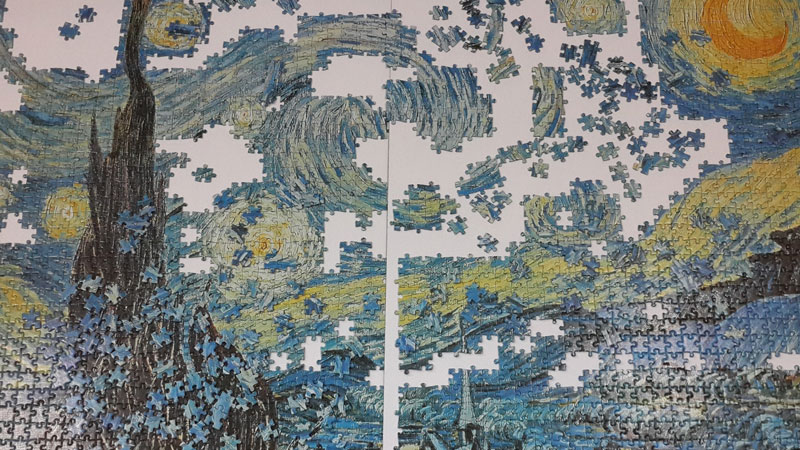
Contemplating the information on this website is a little bit like finding a 5000-piece jigsaw with no picture showing what it is.  Through adding piece by piece, we begin to get a better understanding of what the jigsaw is showing until eventually we end up with a mirror image of ourselves looking up at us.

The problem with this particular jigsaw is that we will often lose pieces, even ones we have already placed.

Hopefully though as we add piece after piece we create a picture of how our own systems operate and influence how we feel, think and behave and through that knowledge we become more self-aware and therefore self-empowered.

We also need to be aware that some of the pieces have yet to be made and we will only be able to add them to the picture at some point in the future.

When I was growing up meditation was all about peace and love and the like, important attributes, but to be really successful at meditating whatever form a person follows, what they really need to be is, determined, patient, focused and courageous.

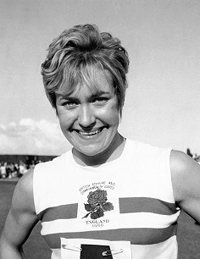
As a young Physical Education teacher, I loved physical exercise.  At that time I remember coming across the words of the brilliant British athlete, Lillian Board.

She explained that for her, daily physical training was as natural a part of everyday life as eating and drinking.

For me, these were not only influential words concerning my regular physical exercise but also formed the foundation to how I approached meditation.

Meditating each day became as natural as eating or drinking and in time required no effort.  The benefits are the natural consequences of this.

expand_more

There are two important points people need to remember and make sure they follow, one helps stabilise and accelerate progress and avoid doing the other that destabilises and deaccelerates progress.

‘For part of your meditation
make sure you have both feet flat
on the ground, especially at the end.’

This helps avoid the adjacent negative reaction.  If you have ever practiced an internal martial art you will have felt how something as simple as having your feet on the ground for a period of time will help you feel calmer with a growing inner stillness and a sense of balance.

This is something that cannot be understood through thinking, it has to be felt.

‘Never, ever, take energy/qi directly into
your head.’

This is for your health, especially your mental health!

In the West our minds are generally too active we don’t need to do the practices which were designed to help people whose minds were relatively under-active (see the café scene in the film ‘Good Morning Vietnam’ with Robin Williams).

In the past I have known of colleagues who have been asked to help with people admitted to mental health units after trying practices that take energy into the head.  They all recovered but it took time.

Connected with this, ~ never meditate when operating machinery, including a car.

If you are not an experienced meditator it can be a good idea to drink some cold water on finishing a meditation session.  It helps us let go of any sleepy- type feelings and to feel present.

“It is indeed a radical act of love just to sit down and be quiet for a time by yourself”

Jon Kabat-Zinn Professor Emeritus of Medicine’

Sources

  1. Me, myself, and us: the science of personality and the art of well-being, by Dr. Brian Little (2014). Published by PublicAffairsTM .   ISBN978-1-58648-967-0
  2. Life On The Edge, The Coming of Age of Quantum Biology by Jim Al-Khalili, and John Joe McFadden. Published by Transworld Publishers, (2014).  ISBN: 978-0-593-06932-5.

3. The Story of the Human Body by Daniel Lieberman. Published by Penguin Books, (2013). Isbn:978-0-141-39995-9.

keyboard_arrow_up